
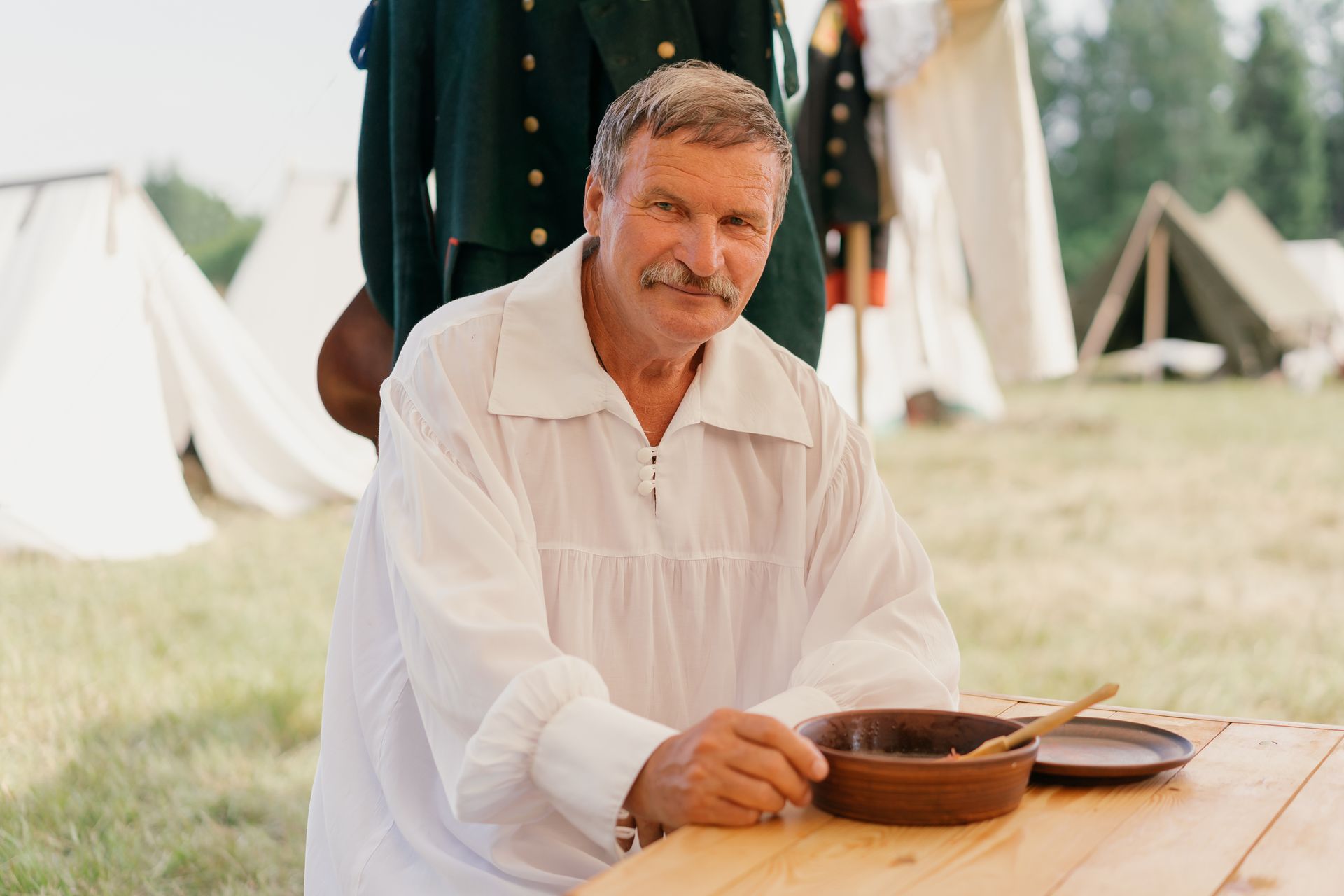
Food occupies an outsized place in Civil War soldiers’ diaries, letters, and memoirs. In the accounts of men who marched hundreds of miles, endured artillery bombardments, and watched comrades die, the subject of what they ate — and more often, what they didn’t eat — recurs with remarkable frequency. This is not surprising: adequate nutrition was literally a matter of survival in an era before the health consequences of malnutrition were fully understood, and the quality and availability of food shaped soldiers’ morale and performance in direct and measurable ways.
The United States Army’s official daily ration for Civil War soldiers included a specific allocation of food intended to provide adequate sustenance for men performing hard physical labor. The standard Union Army daily ration included: 12 ounces of pork or bacon (or 20 ounces of fresh or salt beef); 22 ounces of bread or flour (or 16 ounces of hard bread, known as hardtack); plus periodic allotments of beans, peas, rice, hominy, coffee, tea, sugar, molasses, vinegar, candles, soap, and salt.
Confederate rations were theoretically similar but were progressively more difficult to supply as the war progressed and the Union blockade tightened. By the war’s latter years, Confederate soldiers were operating on dramatically reduced rations — sometimes a handful of cornmeal and a piece of salt pork that would not have fed a working farm animal adequately.
No discussion of Civil War food is complete without hardtack — the simple, virtually indestructible cracker that was the staple food of Civil War soldiers on both sides. Hardtack was made from nothing more than flour, water, and salt, baked until it was bone-dry and hard enough to break a tooth if eaten directly. Its near-total lack of moisture gave it an almost indefinite shelf life, which was its primary virtue from a military supply standpoint.
Eating hardtack was an exercise in ingenuity and patience. Raw hardtack was nearly inedible without significant soaking — soldiers typically broke it into pieces and soaked it in water, coffee, or soup to soften it enough to eat. Another popular method was to fry it in the grease from salt pork, creating what soldiers called “skillygalee.” In warm weather, hardtack biscuits frequently contained weevil larvae or maggots — soldiers dealt with this either by eating in the dark (so they couldn’t see the contents) or by tapping the biscuit on a hard surface first to knock the insects out.
Despite its miseries, hardtack was nutritionally adequate in combination with other rations and provided the caloric foundation for some of the most demanding physical activity men have ever performed.
If hardtack was the Civil War’s most famous food, coffee was its most essential comfort. Union soldiers in particular consumed extraordinary quantities of coffee — by some estimates, the Union Army used 36 pounds of coffee per soldier per year. Coffee was so fundamental to Union Army morale and function that it was one of the last rations to be cut when supplies ran short.
Soldiers carried their green coffee beans in haversacks, roasted them in a tin pan over the fire, crushed them with rifle butts or the flat of a sword, and brewed the result in tin cups. The ritual of making coffee was itself a form of comfort — a connection to the domestic world left behind — and the smell of coffee on a cold morning was one of the most consistently positive sensory experiences available in camp.
Confederate soldiers suffered more from coffee deprivation than almost any other supply shortage. As the Union blockade cut off imports, the Confederacy had to resort to coffee substitutes made from various local materials — roasted chicory, sweet potato, peanuts, or dandelion roots. None of these approximations satisfied soldiers who had grown up drinking real coffee.
Official rations were only part of the food story. Soldiers were responsible for cooking their own food, and the quality of the result depended heavily on skill, equipment, and the availability of supplemental ingredients.
The most basic meal was a simple fry-up: salt pork fried in a tin pan, with hardtack crumbled into the grease. More ambitious cooks made “lobscouse,” a kind of hash made from salt pork, hardtack, and whatever vegetables were available. Fresh bread or cornbread, when flour or cornmeal was available and men had the energy to bake it, was considered a luxury.
Experienced soldiers became remarkably inventive cooks. With access to a Dutch oven or a simple reflector oven made from a canteen half, a skilled camp cook could produce stews, dumplings, and even rough versions of pies from limited ingredients.
Both Union and Confederate soldiers routinely supplemented their official rations through foraging — raiding civilian farms, gardens, orchards, and poultry yards in the areas through which they marched or camped. This practice ranged from technically unauthorized but widely tolerated to formally ordered as part of military strategy, particularly in Sherman’s March to the Sea.
Chickens, pigs, sweet potatoes, apples, corn, honey, and garden vegetables all found their way into soldier diets through foraging. Confederate soldiers in particular, whose official supply systems were chronically inadequate, often depended on foraging to supplement rations that were insufficient to maintain physical condition through hard campaigning.
The food of the Civil War — its hardtack and salt pork, its precious coffee and occasional fresh vegetables, its ingenious camp cooking and systematic foraging — was both a daily challenge and a window into the lives of the men who fought. In Three Tooth Confederate, Cameron Crisp captures the hunger, the ingenuity, and the simple human pleasure of a good meal shared with brothers-in-arms in ways that bring the war’s physical reality to vivid life.