
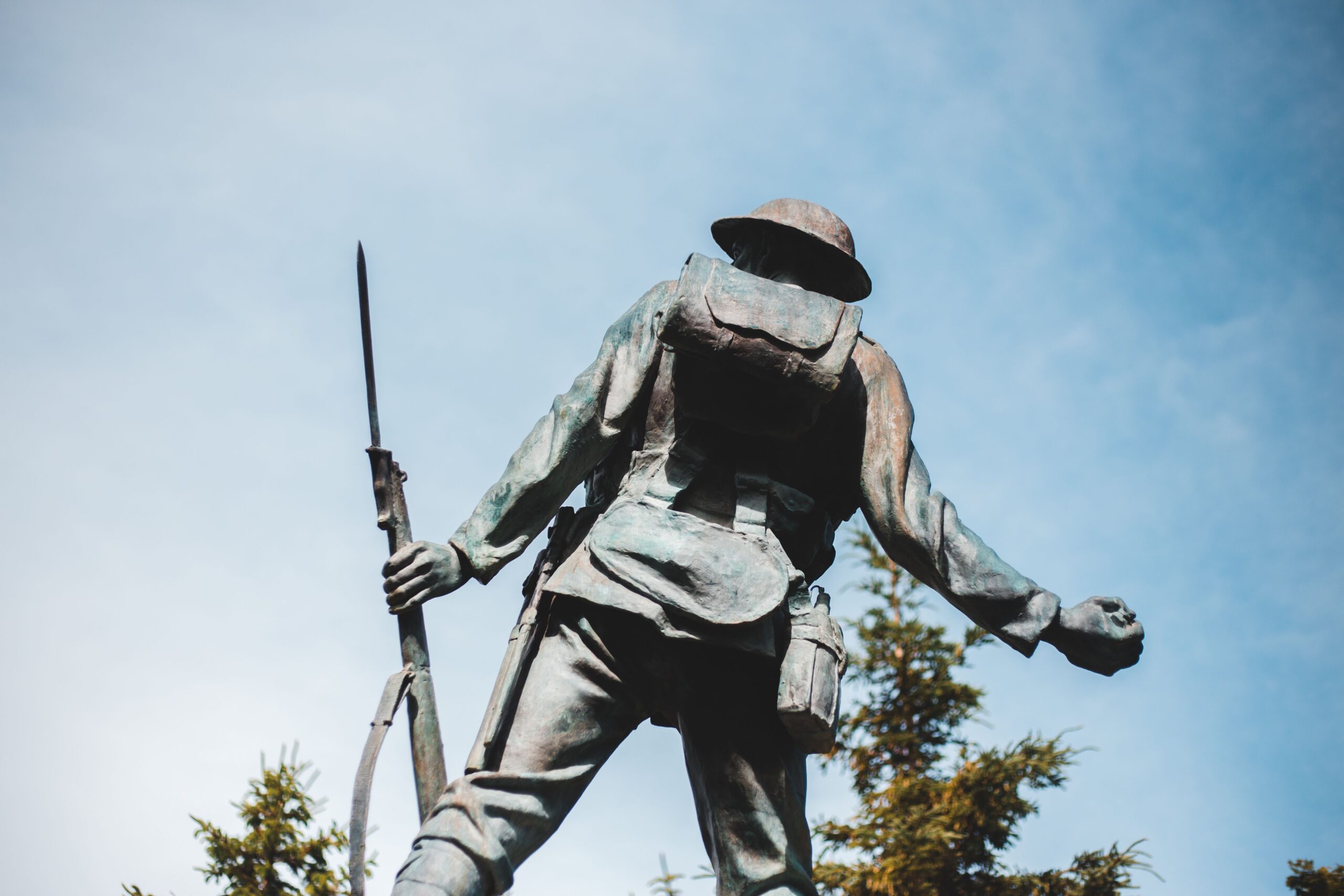
When most Americans think of the first battle of the Civil War, they think of Fort Sumter, Bull Run, or perhaps some other well-known engagement. But the actual first organized land battle of the American Civil War took place on June 3, 1861, in a small town in what is now West Virginia: Philippi. While the engagement was brief, its casualties modest by the standards of what would follow, and its immediate military consequences limited, the Battle of Philippi holds a significant place in Civil War history as the opening act of the terrestrial war and the first test of the Union’s capacity to field and maneuver troops against Confederate forces.
For readers of Cameron Crisp’s Three Tooth Confederate, Philippi is one of the authentic historical settings through which the story’s young protagonist moves – a reminder of how precisely grounded in real history Crisp’s narrative is.
To understand why Philippi mattered, you need to understand the strategic situation in western Virginia in the spring of 1861. When Virginia seceded and joined the Confederacy, it was not a unanimous decision – the western counties of Virginia, with fewer enslaved people, different economic interests, and different cultural ties to the North, were significantly less enthusiastic about secession than the eastern part of the state.
The Union had strong strategic and political reasons to support the Unionist sentiment in western Virginia. The Baltimore and Ohio Railroad, running through the region, was a critical supply link. The loyalty of the western Virginia counties would eventually lead to the creation of West Virginia as a new Union state in 1863. In the spring and summer of 1861, the Union moved quickly to establish a military presence in the region before Confederate forces could consolidate control.
Confederate forces were also in the region, however. A Confederate detachment under Colonel George Porterfield had been organizing Confederate forces in the Philippi area, attempting to recruit volunteers and maintain Confederate control of the strategically important railroad town.
The Union plan for Philippi was developed by General George McClellan – then in command of the Department of the Ohio – and executed on the ground by Brigadier General Thomas Morris and Colonel Benjamin Kelley. The plan called for two Union columns to converge on Philippi from different directions, catching the Confederate forces in a pincer movement.
On the night of June 2-3, approximately 3,000 Union troops conducted a night march through difficult terrain in steady rain, converging on Philippi from two directions. The Confederate garrison – roughly 600 men – had posted inadequate pickets and was caught almost completely by surprise.
In the early morning hours of June 3, the Union columns arrived and opened fire on the Confederate camp. The Confederate troops, surprised and significantly outnumbered, fled in such haste that the engagement was quickly nicknamed “the Philippi Races” by Union troops and the Northern press. Confederate soldiers abandoned their equipment, their cooking fires, and their horses as they fled south along the Tygart Valley River.
The engagement lasted only minutes as an organized fight. Union casualties were extremely light – a handful wounded, no killed in the fighting itself. Confederate casualties were similarly modest, though one Confederate soldier, James Hanger, had his leg shattered by an artillery shell during the brief engagement. He became the first amputee of the Civil War and later developed an improved prosthetic limb design that made him a pioneer in prosthetics development.
As a military engagement, Philippi was negligible compared to what would come. But its significance was real and multilayered.
It was the first organized offensive land operation of the Civil War, establishing that Union forces were willing and capable of aggressive action. It secured the Baltimore and Ohio Railroad line through the region, protecting a vital Union supply and communication artery. It helped establish Union control of northwestern Virginia, contributing to the eventual formation of West Virginia.
It also generated enormous positive publicity in the North at a moment when the Union desperately needed evidence that the war would be winnable. The Northern press celebrated “the Philippi Races” enthusiastically, providing the public with an early confidence that would soon be severely tested at Bull Run.
For Confederate forces, Philippi was a humiliating lesson in the importance of adequate reconnaissance, properly posted pickets, and the dangers of complacency in contested territory.
What Cameron Crisp’s Three Tooth Confederate does with Philippi is precisely what good historical fiction does with real places: it takes the historical record and populates it with human experience. The topography of the Tygart Valley, the pre-dawn darkness and rain of that June night, the shock and chaos of the Confederate rout – these are the raw materials of a scene that Crisp uses to put his young protagonist into contact with the violent, disorienting reality of a war that had barely begun.
Philippi was where the land war actually started. And for a novel whose protagonist is a young Southern soldier navigating the early chaos of the Western Virginia campaign, it is a historically and emotionally perfect opening battleground.
The Battle of Philippi was small in scale but large in significance – the first organized land engagement of the American Civil War, setting in motion a regional campaign that would directly lead to the creation of a new state and foreshadow the complex, brutal conflict that would consume the nation for four more years. For those seeking to understand the war’s opening months, Philippi is an essential and often overlooked starting point.